
Search products by name
Exhaust hoods for special applications
#Technical articles
28/8/2026
Specific solutions for every need
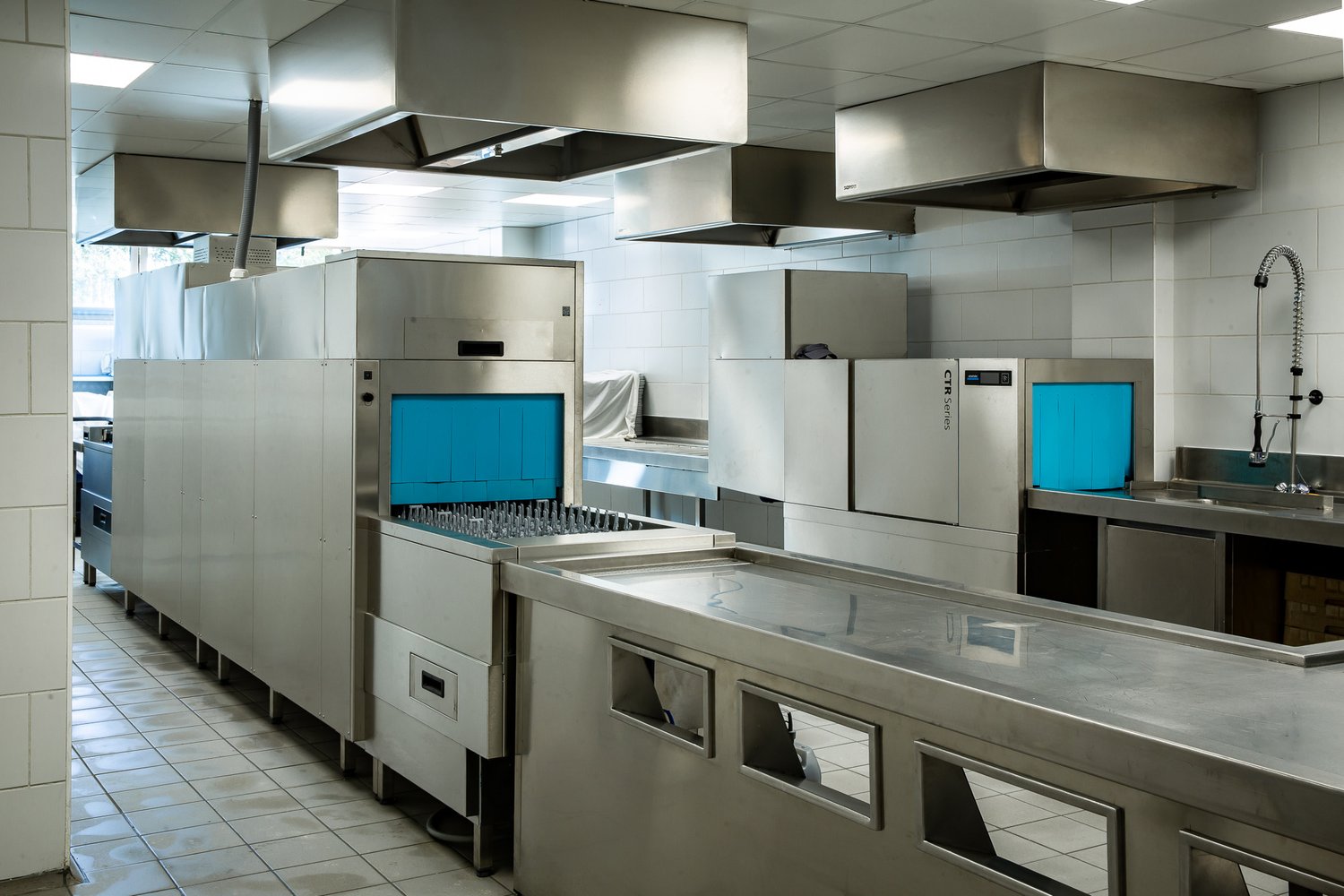
In a professional kitchen, not all equipment generates the same type of smoke or operates under the same conditions. Ovens, barbecues, washing areas, equipment that produces large amounts of steam, or kitchens located in extreme climates require extraction solutions tailored to their specific needs.
That's why, in addition to conventional extractor hoods, there are models specially designed to address particular situations. The filtration system, internal configuration, air management, condensation, or even how it operates in extreme temperatures can make a significant difference in the system's performance.
At Morgui, we offer different extractor hood models for specific applications: Oven, Indok, Hydro, Vapor, Vapor Frig, and Rialp. Each one has been designed to solve a different problem and optimize the capture and evacuation of smoke, grease, steam, or heat.
Which exhaust hood do you need?
Before choosing a range hood, it's essential to analyse the type of activity taking place beneath it. Extracting fumes from an oven is not the same as managing steam from a washing machine, filtering smoke from a charcoal barbecue, or maintaining comfort in a kitchen located in a climate with extreme outdoor temperatures.
This table allows you to quickly identify the main application for each model:
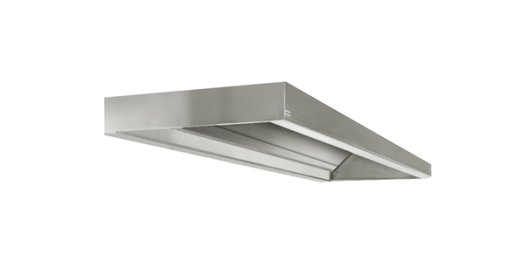
Oven Hood: designed to capture smoke when ovens are opened
Industrial ovens can generate a significant amount of smoke and heat, especially when their doors are opened. This situation requires particularly efficient smoke extraction close to the point where the smoke is released.
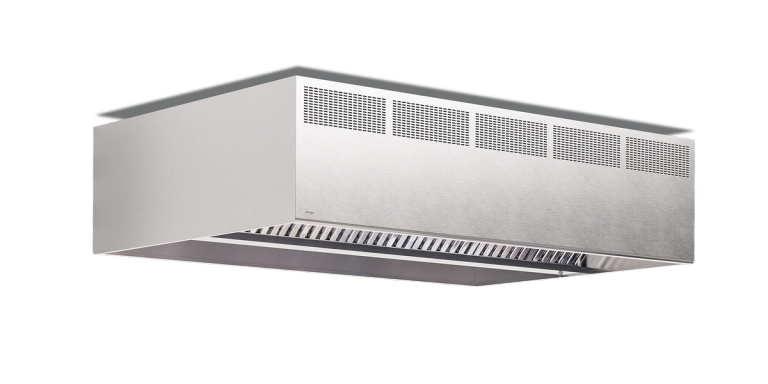
The Morgui Horno Hood incorporates a filter collector located at the front of the hood, a configuration specifically designed to improve the capture of smoke released when opening ovens, kettles, and tilting pans.
It can also include an extraction plenum with regulating dampers and a front air supply plenum. It is available in wall-mounted or centre-mounted configurations and can be custom-made to suit the specific characteristics of each kitchen.
When should you choose it? When the primary need is to control the smoke and vapours released when opening industrial ovens and other similar cooking equipment.
Indok Hood: Air induction for high-production kitchens
High-volume kitchens can generate large quantities of smoke, making proper smoke capture difficult. In these facilities, in addition to the extraction rate, it's important to control airflow around the hood.
The Indok Hood incorporates an air induction system that uses a longitudinal nozzle located at the front to propel air at low speed, helping to direct the smoke towards the filter collector.
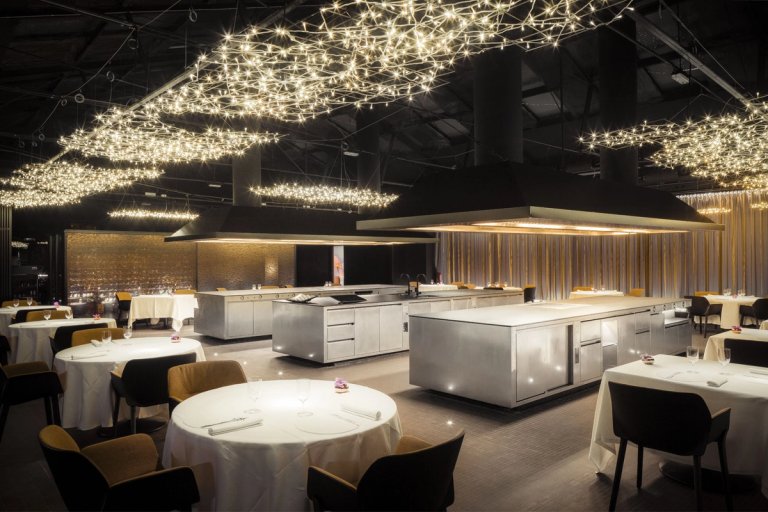
This technology improves smoke retention and is especially suitable for high-volume professional kitchens. It's also highly useful in open kitchens, as it helps retain smoke within the hood's capture area, preventing it from spreading to the rest of the restaurant. The model includes an extraction plenum and can be integrated with a supply plenum.
When should you choose it? When dealing with a high-performance kitchen with significant smoke generation or an open kitchen where improved smoke capture through air induction is needed.
Hidro Hood: water filtration for fumes containing grease and soot
Some cooking applications generate fumes particularly laden with grease and soot, and can reach high temperatures. This is the case, for example, with barbecues, charcoal or volcanic rock grills, rotisseries, and certain chicken ovens.
For these situations, the Hidro Hood incorporates a three-stage filtration system that combines mechanical filtration and water spray.
The first stage retains grease using inertial plate filters. In the second stage, water is sprayed to cool the filters and promote condensation, as well as help settle the grease and moisture particles that passed through the first stage. Finally, a third mechanical stage separates the water droplets.
The system is designed to operate without a pressure pump and has a recommended water consumption of 0.3 l/min per outlet at 2 bar. Morgui also offers a water recirculation module to reuse the water from the filtration process.
When should you choose it?
When the installation generates large amounts of grease, soot and smoke, especially in cooking processes with charcoal, embers or grilling.

Vapor Hood: a specific solution for capturing vapours
Not all emissions from a professional kitchen are smoke. Washing areas, dishwashing lines, and certain cooking processes can generate large amounts of steam and vapor.
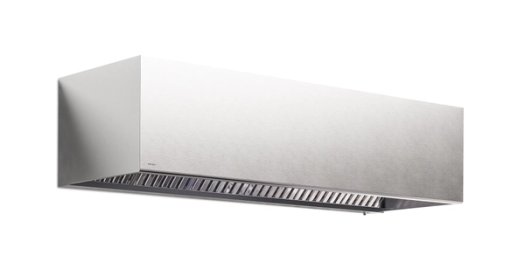
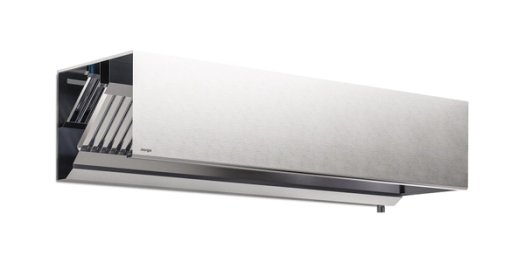
The Vapor Hood is specifically designed for these applications. Its key feature is a triple internal labyrinth that generates accelerations and 180° rotations, encouraging steam to come into contact with internal surfaces and improving condensation.
It is, therefore, a particularly suitable solution for washing areas and equipment such as dishwashers, dishwashing lines, or installations where processes like bain-marie cooking are performed.
When to choose it? When the main problem in the installation is the generation of steam and vapor, and there is a need to enhance its capture and condensation.
Vapor Frig Hood: steam extraction with self-condensing system
In certain installations, conventional air venting to the outside can be complicated or impractical. For these cases, the Vapor Frig Hood incorporates a self-condensing system that allows for steam management without a conventional external air outlet.
Its system combines a triple internal labyrinth with a cooling plate, which promotes steam condensation thanks to the thermal contrast. It also incorporates two fans that direct the steam through the filtration system and allow for the subsequent evacuation of excess air to the false ceiling or the interior of the room.
Like the Vapor Hood, it is designed specifically for dishwashers, washing lines, bain-maries, and other applications where steam is generated.
When should you choose it? When steam control is needed in a washing area or similar environment, and the installation requires an integrated self-condensing system.
Rialp Hood: efficient extraction in extreme temperatures
The location of a kitchen also influences the design of the extraction system. In areas with very high or very low outdoor temperatures, introducing large amounts of outside air can have a significant impact on the climate control and comfort of the space.
The Rialp Hood incorporates BOOST© technology, which goes beyond conventional induction. The system introduces 60% of the extracted air into the hood itself, concentrating the supplied air in the extraction zone and reducing the amount of conditioned air extracted from the premises.
The objective is twofold: to improve the energy efficiency of the installation and maintain better comfort conditions for employees and customers. By avoiding directly introducing outside air into the kitchen, drafts, which can be particularly uncomfortable in extreme outdoor conditions, are also reduced.
When should you choose it? When the kitchen is located in an environment with extreme outdoor temperatures and you want to reduce the impact of the extraction on the climate control of the premises.